
Gender-Based Violence
When the Numbers Are Clear but the Change Is Not

You are sitting in a meeting room with researchers, programme managers, and frontline workers. A slide appears on the screen showing prevalence figures for gender-based violence. The numbers are clear. Everyone nods and there is agreement in the room that this is serious. However, weeks, months, sometimes years later, women, girls, men, and boys in the same communities continue to experience the same risks, the same silence, the same harm. This disconnect between what we know and what changes is one of the most painful realities in GBV work today.
At Infosearch Solutions Ltd (ISL), our work since 2014 has brought us face-to-face with this contradiction time and again. While the data is often clear and the intent is often genuine, the transformation we hope for remains uneven and, in some places, painfully slow. This is not because people do not care or the evidence is weak. It is because evidence alone does not move systems; translation does.
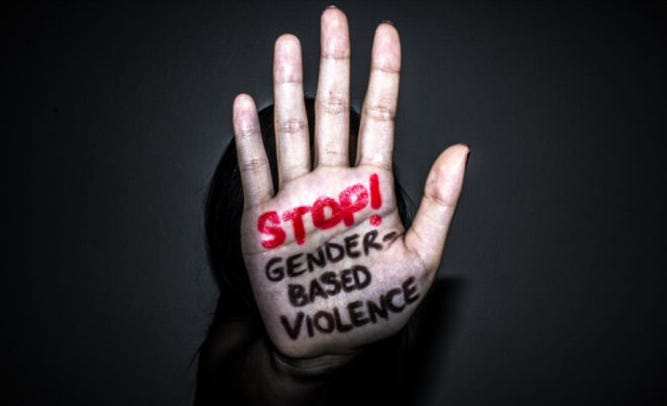
GBV Is Not a Lack-of-Data Problem. It Is a Translation Problem
Over the last decade, governments, NGOs, and development partners have invested heavily in GBV research and data systems. National surveys, monitoring frameworks, evaluations, and assessments have generated vast amounts of information.
We know the prevalence, risk factors, and the consequences (social, economic, psychological, and intergenerational). Yet data often stops short of becoming meaningful action. Why? Because data does not automatically answer the questions people on the ground are asking:
What does this mean for how I do my work tomorrow?
What should change in how institutions respond?
Who needs to act differently and how?
When evidence is presented as static numbers rather than lived realities, it struggles to go beyond reports by shifting norms, priorities, and behaviours, especially in complex social issues like GBV. Translation is the missing bridge We need to shift the focus to turning evidence into insight, insight into decisions, and decisions into sustained change.
What 12 Years of Evaluation Work Has Taught Us About GBV Interventions
Over 12 years of evaluation and learning work across sectors, one lesson has remained consistent: GBV interventions do not fail because people lack commitment, but because complexity is underestimated.
GBV is not a single event. It is shaped by:
Social norms and power relations
Economic stress and dependency
Institutional trust or lack of it
Legal frameworks and enforcement gaps
Cultural expectations around silence and endurance
Evaluations often reveal that well-designed interventions can show strong early promise: increased awareness, improved reporting pathways, better service coordination. However, sustaining those gains requires something deeper than a project cycle.
We have learned that:
Awareness does not automatically lead to safety
Reporting mechanisms do not guarantee justice
Policies do not ensure protection unless institutions are able and willing to act
Over the years, we have observed that the most effective GBV interventions are those that recognise that change is slow, relational, and deeply contextual. These interventions prioritise trust, adapt continuously, and listen closely to those most affected.
Why Prevalence Statistics Rarely Change Behaviour on Their Own
Prevalence statistics are essential, as they make violence visible, help justify investment, and hold systems accountable. But numbers alone rarely change behaviour.
For a survivor, a statistic does not answer the question: Will I be believed?
For a community member, it does not answer: What happens if I speak up?
For a frontline worker, it does not resolve: Do I have the authority and support to intervene?
Behaviour changes when people see that action is possible, consequences are real, and support systems are trustworthy. Without this, data risks becoming distant. In some contexts, repeated exposure to alarming statistics can even lead to fatigue, normalization, or resignation. This is why GBV evidence must be paired with storytelling, dialogue, and institutional reflection. Numbers must be connected to faces, experiences, and decisions.
The Gap Between National Policies and Lived Realities
Many countries today have strong GBV policies on paper, existing legal frameworks, and approved national action plans. Ironically, at community level, survivors still encounter:
Long distances to service
Untrained or overwhelmed staff
Fear of retaliation
Stigma and blame
Slow or inconsistent justice processes
This gap between policy intent and lived reality is the result of under-resourced systems, fragmented coordination, and limited feedback loops between communities and decision-makers. While policies often assume linear implementation, real life is anything but linear. Closing this gap requires the willingness to ask whether policies are working as experienced, not just as designed. It also requires continuous learning rather than one-off evaluations.
ISL’s “Clarity to Transformation” Approach to GBV Evidence
At ISL, we believe evidence has moral weight and carries responsibility, not just to inform, but to improve lives. Our Clarity to Transformation approach is rooted in one simple idea: evidence must travel.
It must travel:
From communities to policymakers
From findings to practical decisions
From reporting to learning
From compliance to accountability
This means combining rigorous research with deep contextual understanding. It also means valuing qualitative insights alongside quantitative trends and creating space for uncomfortable truths and difficult conversations. At ISL, we recognize that behind every data point is a person navigating risk, fear, and resilience.
Gender-based violence is one of the most documented social issues of our time and one of the most resistant to easy solutions. The challenge before us is not to produce more numbers for their own sake, but to ensure that what we already know is used differently, more honestly, and more courageously.
Change begins when evidence stops being something we report and starts becoming something we act on. That is our journey from clarity to transformation, and it is one we must walk together.